
Understanding Motherboard Compatibility, CPU, and GPU Compatibility for Optimal Performance
Understanding the compatibility of the motherboard, CPU, and GPU is crucial when building your PC. Ensuring that all components are compatible and well-aligned with each other is of great importance. Whether you are building a new system or upgrading your existing PC, it’s important to gain an understanding of Motherboard compatibility, CPU compatibility, and GPU compatibility to achieve a balanced and optimal performance. In this guide, we will check how to use a PC parts compatibility checker or a bottleneck calculator to understand the compatibility of different components while building or upgrading a PC.
Why Motherboard Compatibility and CPU Compatibility Matter
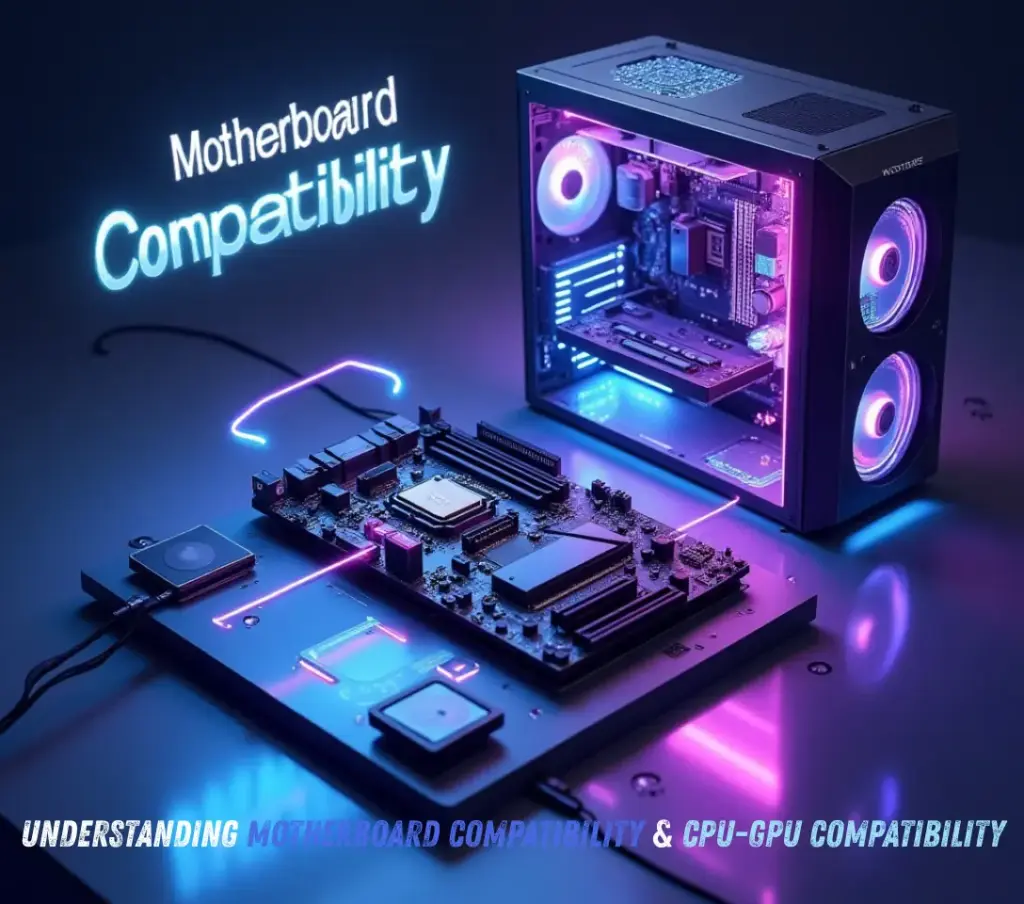
For a person thinking of building a new PC or upgrading their existing one, they need to understand why motherboard and CPU compatibility matter. Ensuring both of your system components, including the CPU and the Motherboard, are well aligned and in optimal working condition is necessary to check motherboard and CPU compatibility.
You are likely to fall into issues regarding the optimal performance of your system if the motherboard does not support the socket type or chipset required for your CPU.
For specific motherboard models, it’s important to use a motherboard CPU compatibility checker to ensure that your motherboard and CPU can work well together. For example, a motherboard with an AMD chipset works well if you are using an AMD CPU. Similarly, if there is an Intel CPU, the compatible motherboard would be with an Intel chipset.
How to Check for Motherboard Compatibility and GPU Compatibility
Motherboard and GPU compatibility are also important in achieving optimal performance of your system. As you know GPU is the core of the computer in achieving an enhanced frame rate and a good resolution experience. Ensuring that the motherboard has the required PCIe slots for supporting a GPU is a necessary measure to take while building a gaming PC or a workstation for graphics-intensive tasks. CPU and GPU compatibility is also important because both components are interconnected in matters of performance and functionality.
A motherboard GPU compatibility checker is important for analyzing the PC motherboard to check if the motherboard can support a high-end graphics card. Also, ensure a proper power supply to achieve full performance of the system. All of the system issues can easily be resolved by our Smart Bottleneck Calculator.
Avoiding Performance Bottlenecks with a Bottleneck Calculator
A bottleneck occurs when there is a disproportion between different components in your system. For instance, pairing a high-performance GPU with an outdated CPU will lead to an imbalance between the CPU and GPU functioning. As a result, the CPU will not be able to withstand the GPU’s functioning, leading to a CPU bottleneck. Likewise, if you pair a weak GPU with a premium CPU, it will lead to a GPU bottleneck.
These measures are particularly important while building a high-performance PC. Our bottleneck calculator can assist you in evaluating your system performance. It also tells you about the components that are causing hindrance in your overall system productivity and can recommend steps to fix these issues.
A bottleneck occurs when there is a disproportion between different components in your system. For instance, pairing a high-performance GPU with an outdated CPU will lead to an imbalance between the CPU and GPU functioning. As a result, the CPU will not be able to withstand the GPU’s functioning, leading to a CPU bottleneck. Likewise, if you pair a weak GPU with a premium CPU, it will lead to a GPU bottleneck.
These measures are particularly important while building a high-performance PC. Our bottleneck calculator can assist you in evaluating your system performance. It also tells you about the components that are causing hindrance in your overall system productivity and can recommend steps to fix these issues.
System Optimization: Overclocking, GPU Thermal Throttling, and Performance Tuning
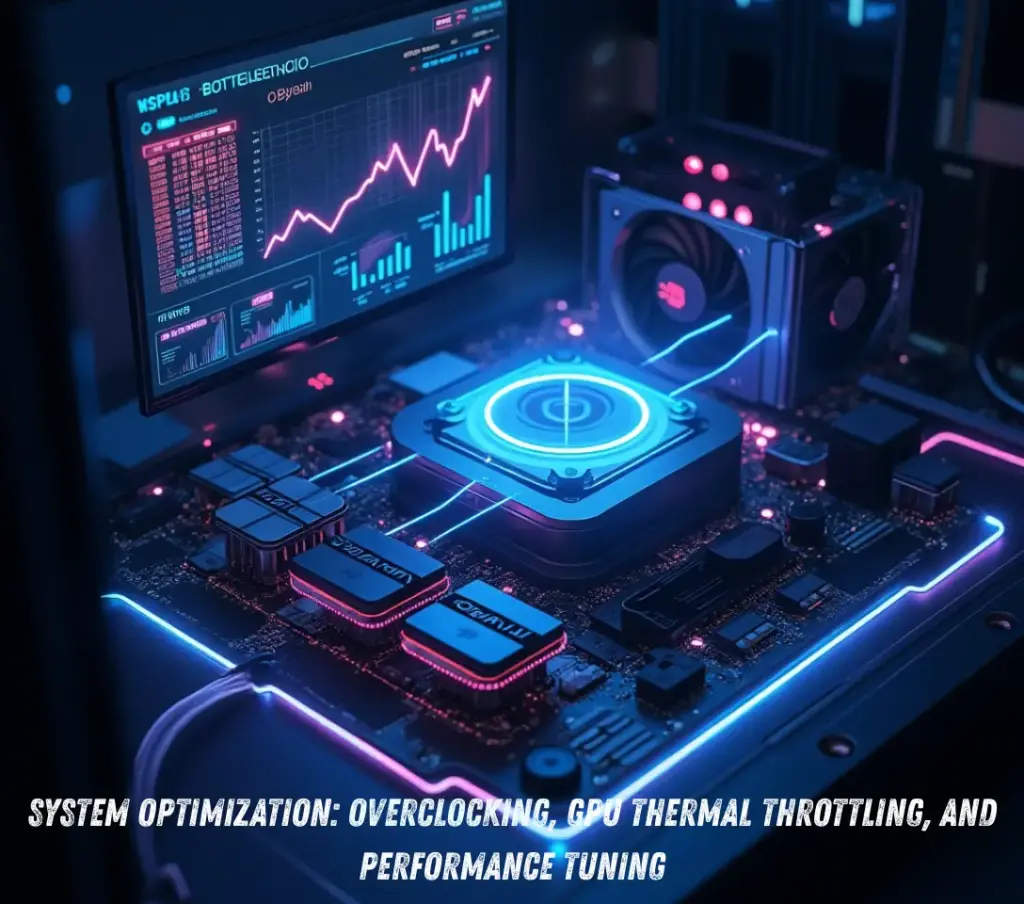
System optimization includes various steps to take after you have finished getting results from the bottleneck calculator on the issues within your setup. For improving CPU and GPU performance, overclocking is one of the best methods, which refers to increasing the clock speed beyond the factory-set speed. Besides getting improved system performance, this process heats the system components greatly.
Another process that greatly reduces the performance of your system is thermal throttling, which can be either GPU thermal throttling or CPU thermal throttling, which occurs mainly due to the absence of a proper cooling system or a well-ventilated place for your PC.
To maximize frame rates and resolution for gaming performance or workstation performance, there are certain measures, like performance tuning, monitoring background processes, closing unnecessary background tabs, and keeping your drivers updated, that can help you achieve optimal performance of your system.
How to Use a PC Parts Compatibility Checker
Using a PC parts compatibility checker is not that difficult. You just have to follow the giver steps:
- Select Your CPU: Insert your CPU details and confirm the type of socket (e.g., AM4, LGA 1200).
- Select a Motherboard: Please provide your motherboard specifications, including the exact chipset, in the next field.
- Choose a GPU: Verify the PCIe slots and the power supply of the motherboard with a graphics card compatibility check.
- Add RAM and Storage: Verify RAM type and speed, and ensure storage compatibility by utilizing a motherboard and RAM compatibility checker.
- Run a Bottleneck Check: After inserting all the details, ensure that you also add your CPU and GPU specifications to the bottleneck calculator.
- Check Case and PSU: Your case should fit all the components, and there must be a proper power supply that meets the wattage needs.
- Review Results: After providing details in all the required sections of the bottleneck calculator, you will have the results.
The results include the necessary upgrades, percentage of the bottleneck, as well as guidelines for further decisions. Using a computer or PC parts compatibility checker like our tool helps you assess any kind of issues within your setup, ensuring pc builder compatibility.
Tips for Optimizing Performance
To achieve optimized performance, you can take the following measures:
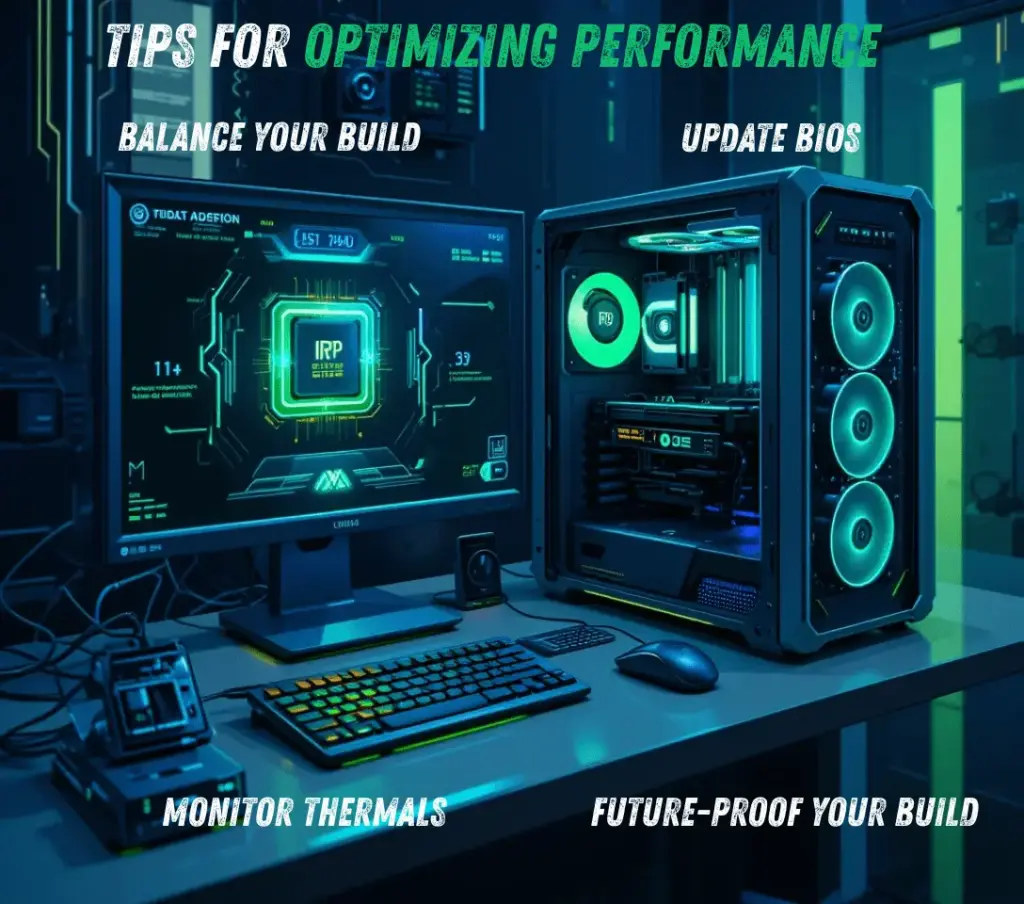
- Balance Your Build: For optimal system performance, always use a bottleneck calculator to ensure your CPU and GPU are well-matched.
- Update BIOS: Regular BIOS updates are required by some motherboards that ensure CPU and motherboard compatibility, particularly for newer CPUs.
- Monitor Thermals: Ensure a proper cooling system and ventilated space for your PC helps you in preventing GPU thermal throttling, which negatively affects your PC.
- Future-Proof Your Build: Future-proofing is a consideration that can be made when selecting a motherboard. The presence of extra PCIe slots or RAM capacity can help with upgrades.
Conclusion
Whether you are building a new PC or upgrading your existing one, there are some important considerations, like hardware compatibility, to make sure that all the components, including CPU, GPU, and motherboard, are working smoothly. Tools like PC parts compatibility checker, MSI Afterburner, hardware compatibility checker, and others help you assess and regulate issues like thermal throttling, frame rate drops, and bottlenecks within your system.
You can actively use our Smart Bottleneck Calculator, which can help you in identifying any bottlenecks within your system and guide you to take necessary decisions regarding upgrades within your system for achieving enhanced performance.


